
When buying land in South Carolina, a proper soil test in South Carolina can save you from disaster. My neighbor Tom bought five beautiful acres in Lexington County last fall. Perfect spot for his dream home. Wooded, quiet, great views. He paid full asking price because the land was so good.
Still, six months later, Tom is living in a rental. His property can’t handle a septic system.
The soil evaluation came back “unsuitable.” Clay layer too close to the surface. Water table too high. Now, Tom is looking at alternative septic systems that cost three times more than he budgeted. His house plans are on hold indefinitely.
A $300 soil test in South Carolina before he bought could have saved him this headache.
Why a Soil Test in South Carolina Matters More Than You Think
Most people buying land focus on location, price, and what’s above ground. Smart buyers look underneath too.
In South Carolina, you can’t get a building permit without septic approval if you’re not on city sewer. And you can’t get septic approval without passing a soil test. It’s that simple.
Here’s what trips people up: beautiful land can have terrible soil for building. That gorgeous meadow might flood every winter. Those mature trees might indicate clay soil that won’t drain. The previous owner’s failed septic system might be hidden under years of vegetation.
I learned this the hard way when I was looking at property near Summerville. The seller had three acres of the prettiest land you ever saw. Rolling hills, good road frontage, mature oaks. I was ready to make an offer until my friend Luke, suggested we check the septic history.
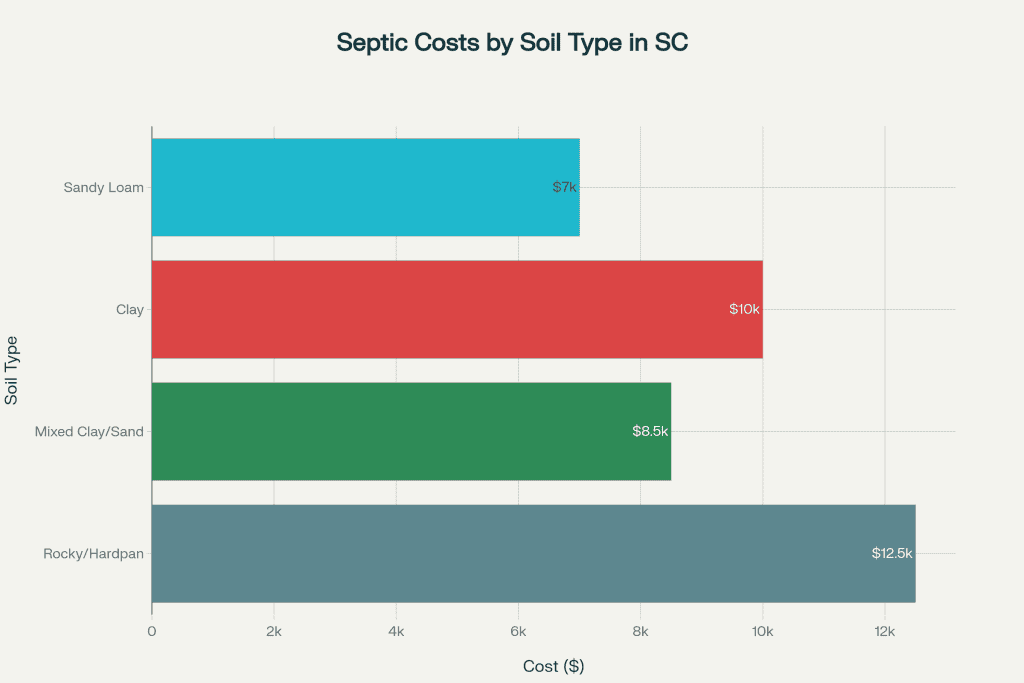
Turns out the previous house had flooded septic problems for years. The soil was mostly clay with a seasonal water table. Building there would have meant an engineered septic system costing $25,000 instead of the $8,000 I budgeted.
I had to walk away from that deal real quick.
What South Carolina Soil Test Evaluators Look For
South Carolina doesn’t mess around with septic systems. The South Carolina Department of Health and Environmental Control (DHEC) has strict requirements because failed septic systems contaminate groundwater.
Key Soil Test in South Carolina Requirements:
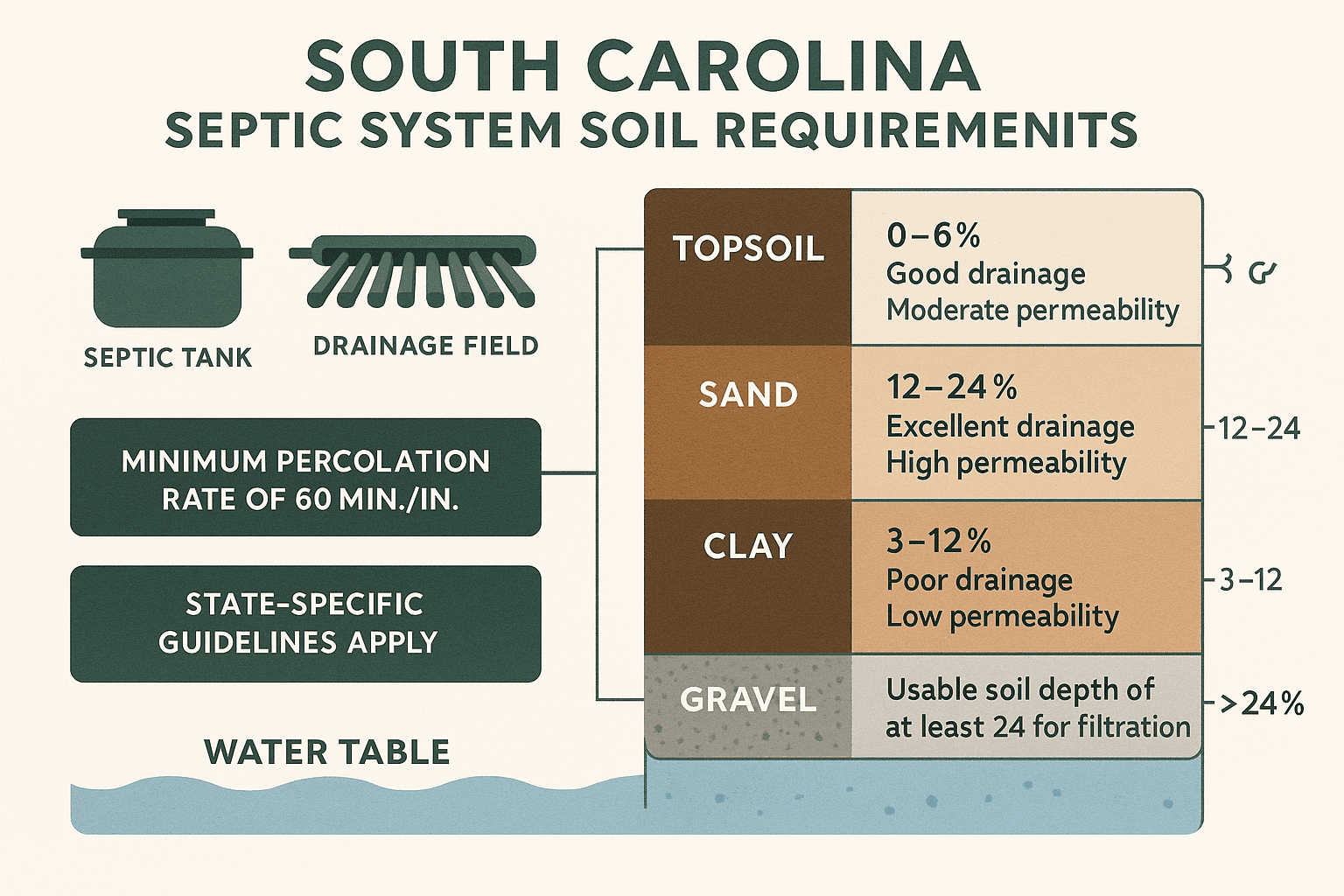
• Soil texture – Sandy soil drains too fast and doesn’t filter waste properly. Clay soil drains too slow and can cause backups. They’re looking for that sweet spot in between.
• Depth to water table – Your septic system needs at least 12 inches above groundwater. Many areas of South Carolina have seasonal high water tables that disqualify sites during certain times of year.
• Depth to rock or hardpan – The drain field needs room to work. When there’s rock or impermeable clay within a foot of where the pipes go, you are going to have problems.
• Slope and drainage – Too steep and the effluent runs off before it’s treated. Too flat and it sits on the surface.
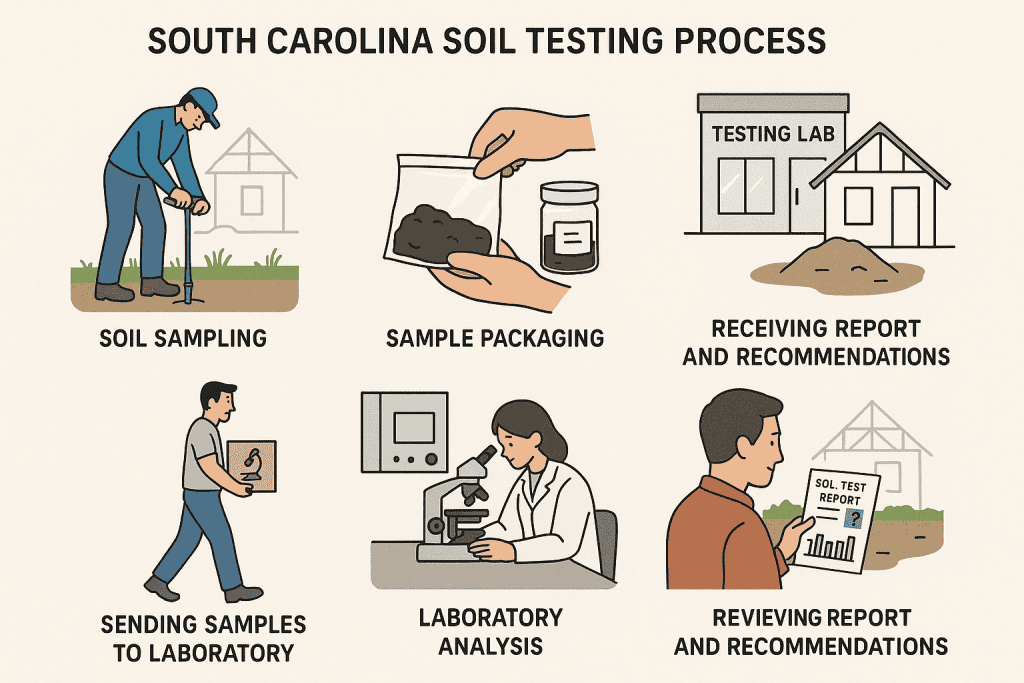
The evaluation costs around $300-400 and takes about two weeks to process. DHEC sends an inspector to dig test holes and evaluate the soil profile. If you’re above the fall line (basically the upper third of the state), you’ll need a backhoe to dig the test pits.
Smart Steps for Buying South Carolina Land.
Before closing on any South Carolina property, make sure you understand the soil test in South Carolina requirements and process. This critical step can prevent expensive septic system surprises that derail your building plans.
Building Foundation Issues You Need to Know About
Septic approval isn’t the only soil concern. Your house foundation depends on stable soil too.
Different soil types require different foundation approaches. Sandy coastal soil might need deeper footings. Expansive clay soil can crack foundations as it shrinks and swells with moisture changes.
A geotechnical soil analysis for building typically runs $800-1,500 but can save you thousands in foundation problems later. The test determines:
Bearing capacity – How much weight the soil can support without settling
Expansion potential – Whether the soil swells when wet
Compaction characteristics – How much the soil will settle under load
Frost depth – How deep foundations need to go to avoid freeze damage
I know a guy in Greenville who skipped the geotechnical analysis to save some money. His house started showing foundation cracks within two years. The clay soil under one corner was expanding and contracting with the seasons. Foundation repair cost him over $15,000.
The soil test would have identified this risk and recommended a different foundation design.
The Land Buying Process That Actually Works
Smart land buyers in South Carolina follow a specific sequence, and this is what we do on every property that we buy in South Carolina too:
First – Get the property surveyed to know exactly what you’re buying.
Second – Order soil tests for septic and building before you close.
Third – Make your offer contingent on passing soil tests.
Fourth – Walk away if the soil won’t support your plans, or make sure that you know how much of a headache and how much money it will cost to make it work.
This process has saved me from several bad purchases. One property in Anderson County had perfect septic soil but terrible building soil. It had soft clay that would have required expensive pier foundations. Another property near Charleston had good building soil but failed septic evaluation due to seasonal flooding.
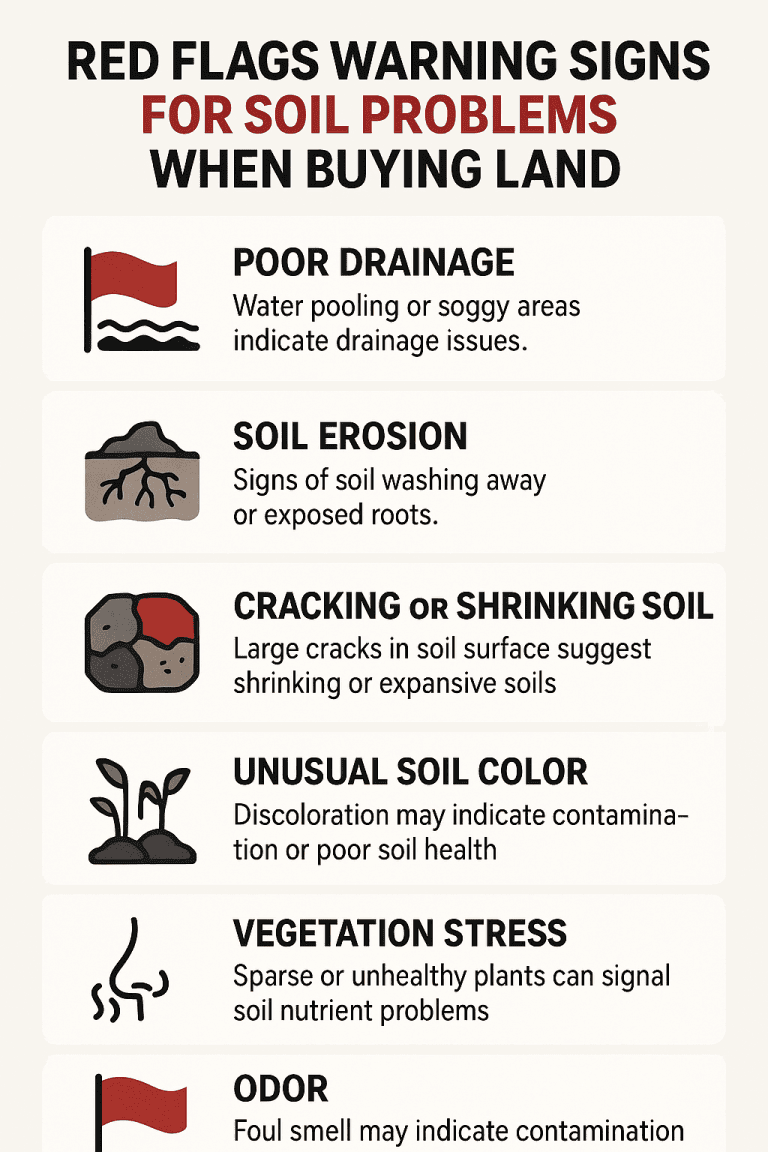
Red Flags to Watch For:
Certain things tip you off to potential soil problems:
Previous septic failures – Ask specifically about septic history
Standing water after rain – Indicates drainage problems.
Certain vegetation – Cattails and water-loving plants suggest wet soil.
Nearby failed systems – If neighbors have septic problems, you might too.
Fill dirt – Previous owners sometimes haul in dirt to fix drainage problems.
The biggest red flag? Sellers who won’t let you do soil testing before closing. That usually means they know something you don’t.
Getting Professional Help
Don’t try to evaluate soil yourself. South Carolina has licensed professionals for each type of testing.
DHEC handles most residential septic evaluations directly. Complex sites may require a Professional Soil Classifier (PSC) or a Professional Engineer (PE).
For building foundation analysis, hire a geotechnical engineer. They’ll provide detailed soil analysis and foundation recommendations.
The Bottom Line on Soil Testing
Soil testing isn’t glamorous, but it’s essential for successful building in South Carolina. The cost is so small compared to the problems you’ll face with unusable soil.
At Land Partner SC, we’ve helped many land sellers navigate soil challenges across South Carolina.
Planning to sell land in South Carolina? And don’t want to deal with all the headache? Call us at 854-254-5535 or email Luke@LandPartnerSC.com or Jordan@LandPartnerSC.com. Even if you have property that doesn’t have good soil, we still might want to purchase your land. We have bought all different types of land. Don’t think that your land is worthless.
Your foundation – literally and figuratively – depends on knowing what’s underneath.